
How to Make an ARG Website That Feels Dangerously Real
Table of Contents
Want to create an ARG (Alternate Reality Game) website that feels truly real? In this guide, you’ll learn step-by-step how to make an ARG website that blends storytelling, puzzles, and interactive design into a seamless experience. Whether you’re building your first project or crafting a professional ARG campaign, this article walks you through everything — from narrative design and web structure to social media integration and launch strategy.
How to Make an ARG Website (Quick Answer)
-
Craft a Compelling Backstory:
Begin with a believable story and characters that drive every puzzle and clue. -
Design with Core Web Tools:
Build your site using HTML, CSS, and JavaScript to control layout, visuals, and interaction. -
Hide Secret Elements:
Add fake login pages, secret iframes, and encrypted messages to create mystery and tension. -
Use Interactive Scripts:
Apply jQuery, AJAX, and localStorage to track player progress, unlock clues, and trigger events. -
Choose a Believable Domain:
Register a realistic domain name and create subdomains that lead to hidden pages or “restricted” areas. -
Embed Hidden Clues:
Hide information in the website’s source code, metadata, or visual layers like images and CSS effects. -
Add Real-World Layers:
Create fake emails, social media accounts, or video messages to extend the narrative beyond the website. -
Focus on Puzzle Flow:
Plan puzzles that feel natural and intuitive, ensuring players stay immersed and challenged. -
Maintain Immersion:
Keep tone, visuals, and story consistent so the experience feels genuinely “real.”
How to Make an ARG Website Using HTML, CSS, and JavaScript
To build an ARG website that feels truly immersive, start with a clean foundation using HTML for structure, CSS for mood and design, and JavaScript for interactivity. Use animations, transitions, and event triggers to make pages react to player actions. Hide subtle clues within the code, visuals, or user interface, guiding visitors to explore deeper layers of your story. Small touches like hover effects, secret links, and pop-up dialogues can make the experience feel alive. Combine creative storytelling with smooth, responsive web design to turn simple pages into a mysterious, interactive adventure.
How an ARG Website Works Behind the Scenes
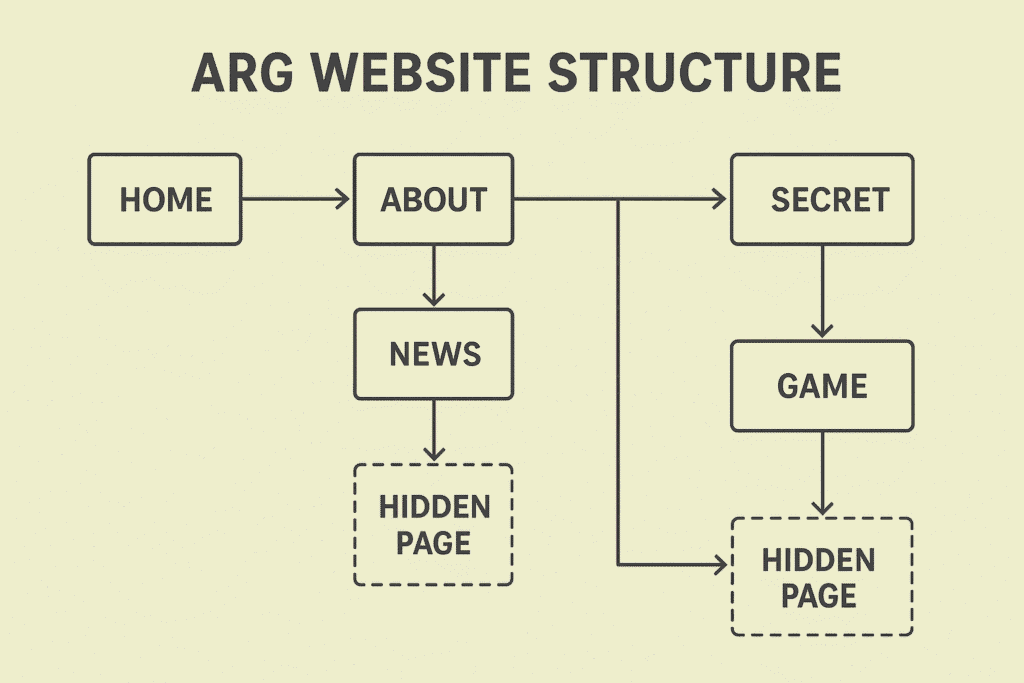
An ARG (Alternate Reality Game) website is like a digital puzzle that blurs the line between fiction and reality. Behind the scenes, it mixes storytelling, design, and coding to create an immersive world. Using HTML, CSS, and JavaScript, developers add hidden links, secret pages, and interactive elements that react to player actions. Every detail—from animations to clues—is designed to draw users deeper into the story. In short, an ARG website combines creative storytelling and smart web design to deliver a mysterious, interactive experience that feels real.
What Is an ARG Website
An ARG (Alternate Reality Game) website is not just a normal webpage—it’s a digital stage where fiction, storytelling, and interactive elements come together to pull the player into a real-feeling narrative. I’ve built these before, and it always starts with a strong backstory and a character or two who guide the user through puzzles, riddles, and missions hidden across pages.
You don’t just design a site—you create a portal with dynamic navigation, secret iframes, and embedded media like video, audio, and flashbacks, all linked by a compelling theme.
You use real tools—html, css, javascript, jquery, even ajax—to build the interface. Things like tokens, authentication, and encryption make the experience feel real, especially when the player receives a strange email, stumbles on a hidden path, or decodes a cluechain inside a fake login form.
Behind the scenes, you might run a localhost, monitor sessions, track ping activity, or store info in a database with precise routing and metadata. These sites can use ssl, send data via webhook, even simulate bot actions or spoofing attempts—all part of the game. An ARG site is part sandbox, part fantasy, and fully a game, made to blur lines and hook people through sheer obsession.
Planning the Puzzle Path and Story Flow
-
Planning is the foundation of every ARG. The story flow and puzzle logic shape how immersive and rewarding the experience feels.
-
Start with a strong backstory and main character whose motivations drive the entire narrative.
-
Keep the storyline natural and engaging, whether it’s a simple arc or a complex, twist-filled plot.
-
Use roleplay, interaction, and dialogue to make users feel genuinely involved in the story.
-
Ensure every event and clue has meaning — each riddle, puzzle, or hidden thread should guide players closer to the main objective.
-
Map your puzzle structure carefully, using flowcharts or visual maps with branching or looping routes for replay value.
-
Place key checkpoints strategically, balancing logic, difficulty, and progression for a smooth player journey.
-
Use storytelling tools like flashbacks, foreshadowing, and flashforwards to build suspense and depth.
-
Make every player action trigger a response, such as decoding encryption, discovering a hidden clue, or unlocking a new path.
-
Test your flow frequently to ensure consistency, realism, and balance between challenge and accessibility.
-
Debug and monitor user flow to refine puzzle timing and player engagement.
-
Follow responsive web design practices to make your ARG accessible and smooth across all devices.
Choosing the Right Domain for Your Fictional World
Choosing the Domain Name: Your domain sets the tone for your ARG world. Pick a name that matches your story’s theme and feels believable—something players could mistake for a real site. A realistic TLD (.net, .org, or country-based) helps sell the illusion.
Setting Up Subdomains for Hidden Paths: Use subdomains to hide clues and secret pages. For example, files.yourdomain.com or admin-login.yourdomain.com can lead players to new discoveries. Subdomains add mystery and make the ARG experience feel layered and interactive.
Using DNS and SSL for Realism: Enable SSL and configure DNS correctly to make your ARG website look authentic and secure. A verified HTTPS site builds trust while enhancing realism—essential for keeping players immersed in your fictional world.
Web Design Tips for Immersion and Mystery
When designing an ARG website, I focus on more than just layout or clean UI—it’s about creating immersion and mystery through every interface choice. I start with a dark colour scheme, layered CSS3 effects, and subtle animations triggered by scroll actions. Hidden clue popups, ambient background audio, and occasional glitches set the tone. Parallax, overlays, and smart layering make the world feel alive, while breadcrumb navigation keeps players on track.
The HTML5 structure supports responsive mobile view with embedded iframes, modals, and fake login screens hiding encrypted clues. Every element—from typography to icons—adds to the suspense. Sometimes I add red herring visuals or mirror pages to deepen realism. Behind the scenes, AJAX, jQuery, tokens, and session tracking manage player progress. It’s all about shaping fiction that feels real, interactive, and just unsettling enough to keep explorers hooked.
Embedding Clues in Source Code and Design
-
Hiding secrets in plain sight is one of the most exciting parts of building an ARG website.
-
Clues can be hidden as comments in HTML or CSS3, or as strange hashes inside JavaScript variables.
-
Developers can use browser inspect tools (like Chrome or Firefox) to reveal hidden metadata, IDs, or class names.
-
A disguised div or off-screen span can hold encoded or encrypted riddles.
-
Messages can also be hidden in session storage, fake SMTP email headers, or intentionally broken layouts.
-
Using jQuery, AJAX, and conditional loops, you can create subtle redirects, fake URLs, or secret pages behind iframes.
-
Clues may appear through console outputs, payloads, or recursion loops that unlock deeper story layers.
-
Visual elements like glitches, distortions, and UI layering enhance the eerie, mysterious feel.
-
Even small details—sitemaps, indexing patterns, or image alt text—can carry symbolic hints.
-
A mix of sandbox unpredictability and hidden breadcrumb trails ensures the experience always feels immersive and real.
Building Believable Personas and Fake Digital Trails
When designing an immersive ARG, realistic digital footprints sell the illusion. I create fake names, profiles, and inboxes, style HTML emails with detailed headers, and use automation to simulate responses. I register subdomains and fake sites with privacy protection, add redirects and 404 traps, and use DNS, SSL, and metadata tricks to reinforce legitimacy. These measures simulate conversations, trackers, and botlike behaviour while preserving anonymity for storytelling, not malice.
Expanding the Game Through Social Media Channels
-
Extending an ARG beyond the main website makes the world feel more real and engaging.
-
Platforms like Twitter, Instagram, and TikTok are used to create fake identities with unique usernames, realistic photos, and complete bios.
-
These alternate profiles form a network of characters who interact through threads, DMs, and tagged posts.
-
Cryptic posts, hashtags, and timed story highlights build suspense and narrative flow across platforms.
-
Discord works well for real-time interaction and community roleplay.
-
Scheduled media drops such as videos, memes, teasers, and live streams on YouTube or Facebook boost engagement and follower growth.
-
Each post, captioned reel, or shared link serves as a digital breadcrumb leading deeper into the story.
-
Tools like Linktree can connect multiple profiles and create cross-platform puzzles with screenshots or coded clues.
-
Monitoring notifications, analysing user behaviour, and tracking post timing keep the story grounded in realism.
-
Maintaining anonymous identities adds intrigue, while every reaction, pinned post, and emoji becomes part of the storytelling strategy.
Evaluating Player Flow and Clue Discovery
When building an ARG, I always run multiple playtests to see how well the clue path unfolds. Each test starts with a structured walkthrough, then follows a dynamic click path that reflects real player choices. I use session replay tools and keep an event log to spot issues like engagement dropoff, dead ends, or confusing sequence flows. I often sketch a flowchart to visualize branching logic, key decision points, and how hint systems trigger based on user intent.
To improve usability, I run QA tests and gather insights from a focus group. Tools like analytics and data capture help track session length, response patterns, and overall immersion rate. I closely monitor error states, fail states, and debug early builds.
A good checkpoint system, with flexible load points, ensures the gameplay loop isn’t frustrating. During the testing phase, I record user reactions, session notes, and assess accessibility, pacing, and task completion.
Through ongoing iteration, feedback loops, and thoughtful scenario planning, the logic path, clue chain, and full interactive path evolve. Using ui testing, variable testing, and heuristic checks, I fine-tune every detail—from navigation maps to pattern solving—so the predicted outcomes feel rewarding and intuitive.
Tips for Launching and Managing Your ARG Website
To launch an ARG smoothly, I always start with domain setup, web hosting, and securing an SSL certificate. If you’re thinking beyond just one game and want to build multiple projects professionally, this resource on building your own web development business offers helpful steps and strategies.
I run checks in a staging environment using a full technical checklist, including load tests, cache control, and 404 handling. Before the launch date, I coordinate scheduling, set up monitoring tools, and prepare for traffic spikes. Once we go live, I track site analytics, monitor response time, and use an alert system to catch errors from the error log or system log.
A strong deployment strategy, regular content updates, and a responsive response team help avoid issues. Post-launch, we manage user feedback, apply patch updates, and use version control, moderation tools, and session tracking to keep the user base engaged while keeping maintenance mode minimal.
Our Web Services – Let’s Build Something Great
We don’t just tell you how to grow a web development business—we partner with you to make it happen. Our expert team offers end-to-end solutions including web development, web design, and SEO. From building fast, responsive websites to crafting visually compelling designs and improving your search engine visibility, we’re here to help you stand out online. Whether you’re a startup taking your first steps or an established business aiming to scale, we’re ready to turn your vision into a powerful digital presence.
Let’s create something exceptional together.
📞 Call us: +92 332 3283011 📧 Email: maryamahemd4r@gmail.com
ABOUT ME !!

Maryam Ahmed
With a passion for modern design and functionality, I create custom websites that are visually appealing, dynamic, and SEO-friendly. From personal blogs to business platforms, I bring your vision to life with creative design and expert development.
RECENT POSTS

Top Web Design Services for Modern Businesses

10 Web Design Tips to Make Your Website Stand Out in 2025

Website Development Basics: A Simple Guide for Beginners

Why Your Social Media Marketing Strategy Isn’t Working

Master UI UX Design with Google and the Best Free Courses Online.

Best WordPress Themes for Modern Business Websites